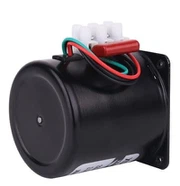

Reducer Structure
Jan 18, 2026
A reducer is a mechanical device that reduces speed and increases torque through gear transmission. Its structure mainly consists of core components such as an input shaft, output shaft, gear set, bearings, housing, and seals.
Depending on the transmission method, reducers can be divided into various types, including planetary gear reducers, worm gear reducers, and harmonic reducers. Among them, planetary gear reducers are widely used in precision transmission fields due to their compact structure, high transmission efficiency (typically above 95%), and strong load-bearing capacity (single-stage torque can reach thousands of Newton-meters). Its core structure includes a sun gear, planet gears, an internal gear ring, and a planet carrier. Power is split through multi-gear meshing, thus achieving a high reduction ratio (commonly 3-100:1) within a small space.
The housing is mostly made of aluminum alloy or cast iron, and uses precision bearings (such as angular contact ball bearings) to ensure smooth operation. The sealing design must meet an IP65 or higher protection rating to prevent lubricant leakage. In high-end applications such as medical robots, reducers also need to have low backlash (<1 arc minute) and low noise (<60dB) characteristics. During installation, ensure that the axial alignment error is within 0.05mm, and regularly replace the grease with one that conforms to ISO VG220 standards to extend its service life.