
Fan Motor Working Principle
Jan 05, 2026
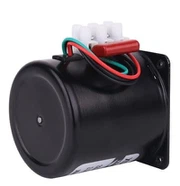
The working principle of a fan motor is based on electromagnetic induction and electromagnetic force. The motor converts electrical energy into mechanical energy, driving the fan blades to rotate. Specifically, when current flows through the motor's coils (stator), a rotating magnetic field is generated. This rotating magnetic field interacts with the rotor (usually a permanent magnet or a magnetic field generated by induced current), producing an electromagnetic force that drives the rotor to rotate. The rotor's rotation is transmitted to the fan blades through the shaft, causing the blades to rotate and generate airflow.
Fan motors are generally classified into AC motors and DC motors. AC motors can be further divided into single-phase and three-phase. Single-phase motors are commonly used in household fans, while three-phase motors are used in industrial fans. DC motors, due to their good speed regulation performance and high efficiency, are increasingly used in high-end fans.
The working principle of a motor also involves several key parameters, such as rated voltage, rated power, and rated speed. These parameters determine the motor's performance and applicable range. For example, rated voltage determines the motor's power supply requirements, rated power determines the motor's output capacity, and rated speed determines the fan's speed range.
Furthermore, the motor's efficiency is also an important indicator. High-efficiency electric motors can convert more electrical energy into mechanical energy, reducing energy loss and thus lowering operating costs. Protection ratings (such as IP54) determine the motor's dustproof and waterproof capabilities, making it suitable for various environmental conditions.
Fan motors have a wide range of applications, from household fans to industrial cooling equipment. Different applications have different requirements for motors; for example, household fans prioritize quiet operation and energy efficiency, while industrial fans prioritize durability and high power output.
In short, the principle of a fan motor is to convert electrical energy into mechanical energy through electromagnetic induction and electromagnetic force, driving the fan blades to rotate. Different types of motors have different characteristics and application scenarios; choosing the right motor is crucial for the fan's performance and efficiency.